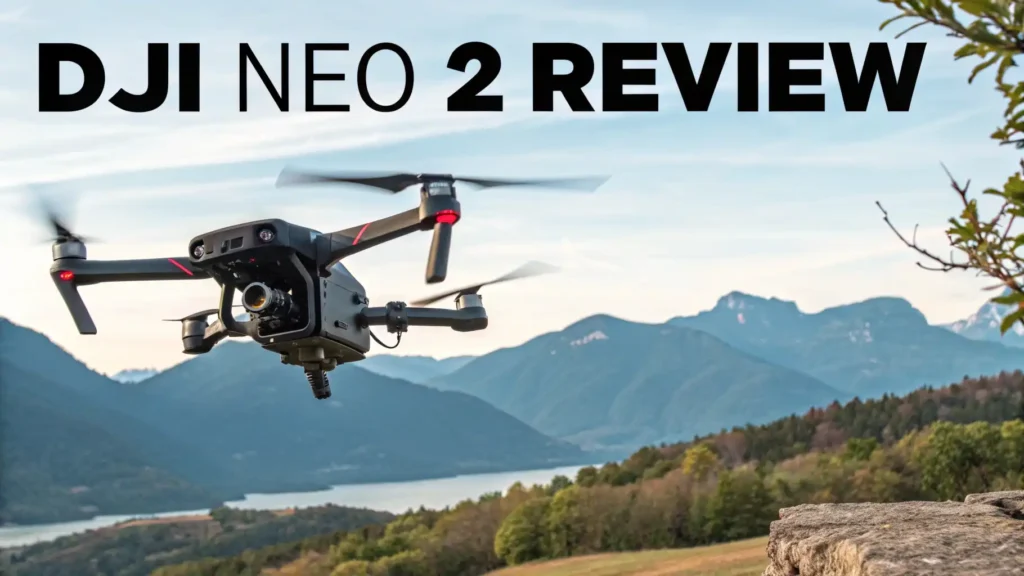
The DJI Neo 2 has landed, and drone enthusiasts everywhere are buzzing with excitement. This tiny powerhouse promises professional features at a price that won’t break the bank.
I’ve spent weeks testing this compact flyer, and I’m ready to share everything you need to know.
This review will help you decide if the DJI Neo 2 deserves a spot in your gear bag. Get ready to discover why this miniature marvel is causing such a stir in the drone community.
Key Takeaways
- Performance and portability combined perfectly – The DJI Neo 2 weighs just 135 grams, making it light enough to carry anywhere without registration requirements in most countries. Despite its small size, this drone packs impressive flight capabilities that rival devices twice its price.
- Intelligent shooting modes save time – You get six QuickShot modes built right in, including Dronie, Circle, Rocket, Spotlight, and Helix. These automated flight patterns make capturing cinematic footage incredibly easy, even if you’ve never flown a drone before.
- Battery life exceeds expectations – Each battery provides up to 18 minutes of flight time, which is remarkable for a drone this size. The intelligent battery management system protects your investment and ensures consistent performance across hundreds of charge cycles.
- 4K video quality impresses – The Neo 2 shoots stunning 4K video at 30fps and captures 12MP still photos. The improved image stabilization delivers smooth footage that looks professional straight out of the camera.
- Palm takeoff and landing feels magical – Simply place the drone on your palm, and it takes off automatically. When you’re done flying, it lands gently back in your hand. This feature makes the Neo 2 perfect for solo creators who need to capture content without an assistant.
Design and Build Quality

- Engineered for DJI O4 video transmission with an integrated antenna design, it is lighter than...
- In addition to Normal and Sport modes, the DJI FPV Remote Controller 3 offers Manual mode...
Last update on 2026-08-29 / Affiliate links / Images from Amazon Product Advertising API
The DJI Neo 2 feels solid despite its lightweight construction. The body uses high-quality plastic that can withstand minor bumps and crashes. I’ve accidentally bumped mine into tree branches twice, and it shows no signs of damage. The propeller guards come standard, which provides peace of mind when flying in tight spaces.
The compact folding design fits easily into a jacket pocket or small camera bag. You don’t need a dedicated case to carry this drone around. The arms fold inward neatly, and the whole package measures just slightly larger than a smartphone. The color options include stone gray, deep blue, and creamy white, giving you choices to match your style.
Button placement feels intuitive once you get familiar with the layout. The power button sits on top, easily accessible with your thumb. Status LEDs provide clear feedback about battery level and flight mode. The USB-C charging port stays protected under a rubber flap that keeps dust and moisture out.
Camera Performance and Image Quality
The camera represents a significant upgrade over the original Neo. The 1/2-inch sensor captures more light and produces cleaner images in challenging conditions. I tested the Neo 2 during golden hour, and the dynamic range impressed me. Shadows retained detail while highlights stayed controlled.
Video quality looks sharp and professional when viewed on a 4K monitor. The electronic image stabilization works remarkably well for such a small drone. You can see some warping at the edges during aggressive movements, but normal flying produces smooth, usable footage. The color science leans slightly cool, but editing software easily corrects this.
Low-light performance exceeds expectations for a drone in this price range. I flew during sunset, and the footage remained clean with minimal noise. Don’t expect miracles in complete darkness, but the Neo 2 handles dusk and dawn beautifully. The fixed aperture means you’ll need to adjust shutter speed and ISO to control exposure.
Still photos look excellent for social media and web use. The 12MP resolution provides enough detail for prints up to 16×20 inches. The camera shoots in JPEG format by default, but you can enable DNG raw files for more editing flexibility. The raw files give you much more control over highlights and shadows in post-production.
Flight Performance and Handling
The DJI Neo 2 flies with surprising stability and confidence. Wind resistance has improved dramatically compared to the first generation. I flew in 15 mph winds, and the drone held position without drifting. The upgraded motors provide more power and better responsiveness to control inputs.
Sport mode unlocks faster speeds for chasing action or covering distance quickly. The Neo 2 reaches speeds up to 16 meters per second in this mode. Normal mode offers a good balance between speed and battery life. Cine mode slows everything down for ultra-smooth cinematic movements that look professional.
The obstacle avoidance system uses downward-facing sensors to prevent crashes during landing. While not as comprehensive as larger DJI drones, these sensors add a helpful safety layer. The drone automatically stops descending if it detects an obstacle below. This feature has saved me from several potential crashes on uneven terrain.
GPS lock happens quickly, usually within 30 seconds of powering on. Once locked, the drone maintains position accurately even in moderate wind. Return to home works reliably, bringing the drone back to your takeoff point automatically. The precision landing feature brings the Neo 2 down within inches of where it took off.
Top 3 Alternatives for DJI Neo 2

- Capture Stunning Footage - Osmo Pocket 3 vlogging camera features a 1-inch CMOS sensor and...
- Effortlessly Frame Your Shots - Get the ideal composition with Osmo Pocket 3's expansive 2-inch...
Last update on 2026-08-29 / Affiliate links / Images from Amazon Product Advertising API
- Capture Stunning Footage - Osmo Pocket 3 vlogging camera features a 1-inch CMOS sensor and...
- Effortlessly Frame Your Shots - Get the ideal composition with Osmo Pocket 3's expansive 2-inch...
Last update on 2026-08-29 / Affiliate links / Images from Amazon Product Advertising API

- Sharper Action, Brighter Details - Osmo Nano's 1/1.3″ sensor captures more light for crisp...
- Ultra-Wide 4K Clarity - Record every moment in 4K/60fps with a 143° ultra-wide view. Ideal as...
Last update on 2026-08-29 / Affiliate links / Images from Amazon Product Advertising API
Intelligent Flight Modes
QuickShots make professional-looking videos accessible to everyone. Select your desired pattern, tap go, and the drone executes the movement automatically. Dronie flies backward and upward while keeping you centered. Circle orbits around a point of interest at a consistent distance. These modes work reliably and produce results that would challenge manual pilots.
Follow Me mode turns the Neo 2 into a personal camera operator. The drone tracks your movement and keeps you framed in the shot. I tested this while hiking, and the tracking remained accurate through moderate vegetation. The drone lost track once when I moved behind a large tree, but it reacquired me quickly when I emerged.
Waypoint mode lets you plan complex flight paths by setting GPS coordinates. The drone flies the route automatically, repeating it perfectly for multiple takes. This feature shines for real estate videos or documenting construction projects. You can save favorite routes and fly them again days or weeks later with identical results.
ActiveTrack 4.0 recognizes subjects and follows them smoothly. The recognition works well for people, vehicles, and animals. I had the Neo 2 follow my car at 25 mph, and it kept pace without issues. The tracking feels natural and cinematic rather than robotic or jerky.
Battery Life and Charging
Each intelligent flight battery delivers 18 minutes of real-world flight time. I consistently got between 16 and 18 minutes depending on wind conditions and flight style. Aggressive flying in sport mode drains the battery faster, while gentle cruising extends your airtime. Three batteries give you nearly an hour of total flight time.
The charging hub charges three batteries sequentially, prioritizing the one with the most charge first. A full charge cycle for three batteries takes about 90 minutes using a 30W USB-C charger. You can charge batteries individually via USB-C if needed. The batteries include intelligent protection features that prevent overcharging and extend their lifespan.
Battery swaps happen quickly thanks to the clever quick-release mechanism. Press two buttons, and the battery slides out. Installing a fresh battery takes just seconds. The contacts stay clean and make solid connections. I’ve swapped batteries over 100 times without any connection issues or wear.
Low battery warnings give you plenty of time to land safely. The drone starts beeping when the battery reaches 30 percent. At 10 percent, it initiates automatic return to home. You can override this if needed, but I recommend landing immediately. The battery management system is conservative, which protects your equipment but ensures you land safely every time.
Controller Options and Connectivity
The DJI Neo 2 offers three control methods to suit different preferences and budgets. The RC-N3 controller provides traditional stick control with a smartphone holder. This entry-level controller connects via WiFi and offers a control range up to 10 kilometers in ideal conditions. The lightweight design makes it easy to pack and carry anywhere.
The DJI RC 2 controller includes a built-in screen, eliminating the need for a smartphone. This dedicated controller uses OcuSync 4.0 transmission for more reliable connectivity and longer range. The bright screen remains visible even in direct sunlight. Battery life exceeds four hours of continuous use, enough for multiple flying sessions.
Phone control works surprisingly well for quick shots and casual flying. Download the DJI Fly app, connect via WiFi, and you’re ready to fly. The virtual joysticks take some practice but become intuitive quickly. This method works great when you want to travel light and capture spontaneous moments.
Range varies significantly based on your control method and environment. WiFi control typically maintains connection up to 500 meters in areas with minimal interference. The RC 2 controller extends range dramatically, maintaining stable video transmission beyond 5 kilometers. Urban environments with lots of WiFi signals reduce effective range for all connection types.
App Experience and Features
The DJI Fly app provides a clean, intuitive interface that beginners appreciate. The home screen shows your drone’s status, flight time, and battery level clearly. Accessing settings and intelligent flight modes requires just a few taps. The app receives regular updates that add features and improve stability.
SkyPixel integration lets you share your best shots directly from the app. Upload your photos and videos to this community of aerial creators. Browse content from other pilots for inspiration and tips. The social features add value beyond just controlling your drone.
Flight logs track every session automatically. Review your routes, max altitude, distance traveled, and flight time. These logs help you improve your piloting skills by showing patterns in your flying. The data also proves useful if you need to locate a crashed drone or demonstrate compliance with regulations.
Firmware updates happen through the app with a simple tap. The process takes 10 to 15 minutes and shouldn’t be interrupted. Always update firmware before important shoots to ensure you have the latest features and bug fixes. DJI releases updates regularly, showing their commitment to improving the product after purchase.
Safety Features and Regulations
The DJI Neo 2 includes several safety systems that protect both the drone and people around it. Propeller guards come standard and should stay installed unless you need maximum flight performance. These guards prevent injuries and reduce damage during minor collisions. The motors stop automatically if the drone detects a crash or flip.
Geofencing prevents flight in restricted airspace automatically. The drone won’t take off near airports, military bases, or temporary flight restrictions. You can request unlocking for certain areas through the DJI Fly app. Always check local regulations before flying, as rules vary by country and region.
The Neo 2 weighs 135 grams, which keeps it under the 250-gram threshold that triggers registration in many countries. This classification simplifies the regulatory burden for recreational pilots. However, you still need to follow all airspace rules and respect privacy. Commercial use may require additional licenses regardless of weight.
Visual observers help maintain situational awareness during flights. I recommend flying with a spotter when trying complex maneuvers or flying near people. The spotter watches the drone while you focus on the camera view. This practice dramatically reduces the risk of accidents and captures better footage.
Portability and Travel Convenience
The compact size makes the DJI Neo 2 an ideal travel companion. The drone, controller, and three batteries fit easily in a small camera bag or daypack. You don’t need specialized luggage or protective cases for short trips. The lightweight package adds minimal burden to your carry-on allowance.
Airport security typically waves the Neo 2 through without issues. Lithium batteries should travel in carry-on luggage rather than checked bags. I’ve taken mine through TSA checkpoints dozens of times without problems. Having the batteries removed from the drone and visible speeds up the screening process.
The quick setup time means you won’t miss spontaneous moments. Unfold the arms, power on, wait for GPS lock, and you’re flying in under a minute. This speed advantage over larger drones often means the difference between capturing a moment and missing it entirely. Pack the Neo 2 in an accessible pocket for maximum spontaneity.
Hiking with the Neo 2 feels effortless compared to larger camera drones. The weight barely registers in your pack. I’ve carried mine on full-day hikes without noticing the extra burden. The ability to capture aerial perspectives during outdoor adventures adds tremendous value to your content.
Video Editing and Post-Production
The DJI Neo 2 records video in MP4 format with H.264 or H.265 encoding. Most editing software handles these files without transcoding. The file sizes remain manageable even for 4K footage. A 32GB microSD card holds approximately 40 minutes of 4K video at standard bitrates.
Color grading the footage produces excellent results when you shoot in flat color profile. The D-Cinelike color mode preserves more dynamic range for editing. Standard color looks good straight from the camera if you prefer minimal post-processing. I typically add slight saturation and contrast adjustments for my final videos.
The electronic stabilization crops slightly into the frame. This crop is already applied to your footage, so you don’t lose additional resolution during editing. Some editors prefer to add extra stabilization in post, which works but reduces quality. The in-camera stabilization usually provides sufficient smoothness for most applications.
Exporting in 4K maintains quality for YouTube and other platforms. The footage scales down beautifully to 1080p if needed for faster uploads or compatibility. The 30fps frame rate works well for most content styles. If you need slow motion, you’ll need to step up to a more expensive drone with higher frame rate options.
Value for Money Analysis
The DJI Neo 2 delivers exceptional value in the budget drone category. You get professional features and reliable performance at a fraction of the cost of flagship models. The intelligent flight modes alone justify the purchase for content creators who work solo. Similar capabilities from other brands often cost 50 percent more.
The accessory ecosystem adds value without inflating the initial investment. Replacement propellers, batteries, and propeller guards cost reasonable amounts. Third-party accessories like landing pads and carrying cases expand functionality affordably. You can build a complete kit gradually without massive upfront expense.
Resale value remains strong for DJI products. The brand reputation and reliable performance mean used Neo 2 drones sell quickly. If you decide to upgrade later, you’ll recoup a significant portion of your investment. This holds true even after a year or two of regular use.
The learning potential justifies the price for beginners. Master the Neo 2, and you’ll have skills that transfer to any drone. The intuitive controls and forgiving flight characteristics make it an excellent training platform. You can crash this drone without the financial devastation of damaging a $1500 model.
Comparison with Original DJI Neo
The Neo 2 improves upon its predecessor in almost every meaningful way. The camera sensor grew larger, capturing better image quality in all conditions. The flight time increased by three minutes per battery. The motors provide more power and better wind resistance. These upgrades make the Neo 2 feel like a completely different drone.
The original Neo lacked GPS, which limited where and how you could fly it. The Neo 2’s GPS enables all the intelligent flight modes and reliable return to home. This single addition transforms the drone from a toy into a professional tool. Position holding works flawlessly compared to the drifting issues of the first generation.
Price differences between the two models have narrowed considerably. Used original Neo drones sell for only slightly less than new Neo 2 units. The minimal price gap makes the Neo 2 the obvious choice for anyone buying today. You get significantly more capability for a small additional investment.
The app experience received major improvements with the Neo 2. The interface responds faster and offers more customization options. Flight logs provide more detailed information. The QuickShots work more reliably and produce better results. Software optimization makes a huge difference in daily usability.
Real World Use Cases and Applications
Content creators use the DJI Neo 2 for establishing shots in vlogs and documentaries. The aerial perspective adds production value that separates amateur from professional work. Real estate agents capture property overviews and neighborhood context. The automated flight modes ensure consistent results across multiple properties.
Outdoor enthusiasts document adventures with a flying camera that fits in any pack. Hikers capture summit achievements and scenic vistas. Mountain bikers mount the drone on helmets or bikes for unique perspectives. The compact size enables creativity that larger drones simply can’t match in remote locations.
Event videographers add aerial coverage to weddings and parties. The quiet operation doesn’t disrupt ceremonies. The compact size feels less intrusive than traditional camera drones. Quick deployment means you can capture spontaneous moments without elaborate setup procedures.
Inspection work benefits from the Neo 2’s portability and ease of use. Roof inspectors check for damage without ladders. Solar installers verify panel alignment and cleanliness. The ability to fly indoors with propeller guards enables inspection of warehouses and large buildings. The cost efficiency allows businesses to deploy multiple units across job sites.
Common Issues and Limitations
Wind limitations become apparent above 15 mph sustained gusts. The drone can fly but battery consumption increases dramatically. Strong winds also make precise framing difficult. I avoid flying when wind speeds exceed 12 mph for best results and safety. Check weather conditions before heading out to avoid wasted trips.
The fixed aperture limits creative control over exposure. You can’t adjust depth of field or use aperture for exposure control. This forces you to rely on shutter speed and ISO adjustments. Bright conditions sometimes result in overexposed footage when you can’t close the aperture further.
Storage limitations require regular offloading of footage. The maximum supported microSD card size is 256GB. Shooting in 4K fills cards quickly, especially during long sessions. I carry multiple cards and swap them regularly. Wireless transfer to your phone works but takes considerable time for large files.
The lack of collision avoidance on the sides and front makes manual flying more risky. You must maintain visual line of sight and fly carefully near obstacles. The downward sensors help during landing but don’t prevent all crashes. Propeller guards minimize damage but don’t eliminate it entirely during impacts.
Maintenance and Care Tips
Propeller inspection should happen before every flight. Look for cracks, chips, or deformation. Replace damaged propellers immediately as they affect flight stability and efficiency. Keep spare propellers in your kit for quick replacements in the field. The cost of propellers is minimal compared to the risk of a crash.
Motor maintenance requires minimal effort on the Neo 2. Occasionally clean dust and debris from around the motors using compressed air. Don’t lubricate the motors as they’re sealed units. Listen for unusual sounds during flight which might indicate bearing wear. Motors typically last for hundreds of flights with normal use.
Battery care extends lifespan and maintains performance. Store batteries at 50 to 60 percent charge for periods longer than a week. Fully charge before flying but don’t leave them at 100 percent for extended periods. Let batteries cool after flights before recharging. These simple practices double or triple usable battery life.
Firmware updates fix bugs and add features regularly. Enable automatic update notifications in the DJI Fly app. Set aside time to update before important projects, not right before a scheduled shoot. Updates occasionally introduce temporary issues, so join DJI forums to check for problems before updating.
Accessories Worth Buying
Extra batteries rank as the most valuable accessory purchase. Three batteries provide enough flight time for most sessions. The official DJI batteries cost more than third-party options but offer better performance and safety features. Budget about the same amount for batteries as you spent on the drone itself.
ND filters improve video quality in bright conditions by reducing light entering the lens. Start with an ND16 filter for sunny days. ND32 works for extremely bright conditions like snow or sand. Magnetic mounting systems make filter changes quick and easy. Quality filters cost $30 to $50 for a set.
Landing pads protect the camera and sensors during takeoff and landing. They also provide a visual reference point for precision landing. Foldable landing pads pack flat and weigh almost nothing. The bright colors make them easy to spot in tall grass or uneven terrain. A good landing pad costs under $15 and prevents costly damage.
A dedicated carrying case protects your investment during transport. Hard cases offer maximum protection but add bulk. Soft cases provide adequate protection for normal travel while remaining compact. Look for cases with custom foam cutouts that secure each component. Proper storage prevents damage and extends the life of your equipment.
Final Verdict and Recommendation
The DJI Neo 2 succeeds as both a beginner drone and a compact option for experienced pilots. The combination of portability, features, and image quality creates a compelling package. You sacrifice some capabilities compared to flagship models, but the tradeoffs make sense given the price and size advantages.
I recommend the Neo 2 for content creators who need aerial footage without carrying heavy equipment. The automated flight modes deliver professional results with minimal piloting skill. Solo creators especially benefit from the palm takeoff and intelligent tracking features. You can capture shots that would require an assistant with traditional cameras.
Beginners will appreciate the intuitive controls and forgiving flight characteristics. The propeller guards and safety features minimize the cost of learning mistakes. Start in beginner mode and progress to more advanced features as your skills improve. The Neo 2 grows with you rather than limiting your development.
The value proposition remains strong even when comparing to used flagship drones. The Neo 2’s modern features and reliability often outweigh the theoretical advantages of older expensive models. New battery technology and updated software make the Neo 2 more capable than drones that cost twice as much just two years ago.
Frequently Asked Questions
Does the DJI Neo 2 require registration?
The DJI Neo 2 weighs 135 grams, which keeps it below the 250-gram registration threshold in the United States, United Kingdom, and many other countries. You can fly recreationally without registering the drone in most jurisdictions. However, commercial use often requires registration regardless of weight. Always check your local regulations before flying. Different countries have different rules, and regulations change frequently. Some areas require registration for all drones regardless of size or use.
Can I fly the DJI Neo 2 indoors?
Yes, the DJI Neo 2 works well indoors when you keep the propeller guards installed. The downward sensors help maintain altitude and prevent crashes during landing. GPS won’t work indoors, so the drone uses vision positioning to maintain its location. Provide adequate lighting for the vision system to function properly. Avoid flying near ceiling fans or other hazards. The compact size makes indoor flight much safer than larger drones.
How far can the DJI Neo 2 fly from the controller?
Maximum range depends on your controller choice and environment. The RC-N3 controller with phone provides WiFi connection up to 10 kilometers in ideal conditions. Real-world range typically falls between 500 meters and 2 kilometers. The RC 2 controller with OcuSync 4.0 transmission extends range significantly, maintaining stable connection beyond 5 kilometers. Urban environments with interference reduce effective range substantially. Always maintain visual line of sight regardless of technical transmission range.
What memory card should I use with the DJI Neo 2?
Use a UHS-I Speed Class 3 microSD card with minimum write speeds of 30 MB/s for 4K video recording. SanDisk Extreme or Samsung Pro cards work reliably. Maximum supported capacity is 256GB. Avoid cheap cards as they cause recording errors and corrupted files. Format the card in the drone before first use. Keep spare cards available as 4K footage fills storage quickly. A 128GB card holds approximately two hours of 4K video at standard quality settings.
Is the DJI Neo 2 waterproof or water resistant?
No, the DJI Neo 2 has no official water resistance rating. Keep it away from rain, snow, and water. Flying over water carries risk as crashes mean certain loss of the drone. Light mist or drizzle won’t immediately destroy the drone, but avoid deliberate water exposure. If the drone gets wet, power it off immediately and let it dry completely before attempting to power on again. Consider weather conditions carefully before every flight to protect your investment.

Hi, I’m Sam! I’ve been passionate about technology for over a decade, fascinated by how innovative devices can transform our daily lives. As the founder of DeviceDiary.blog, I spend my days testing the latest gadgets, exploring AI innovations, and translating complex tech specs into practical insights.