
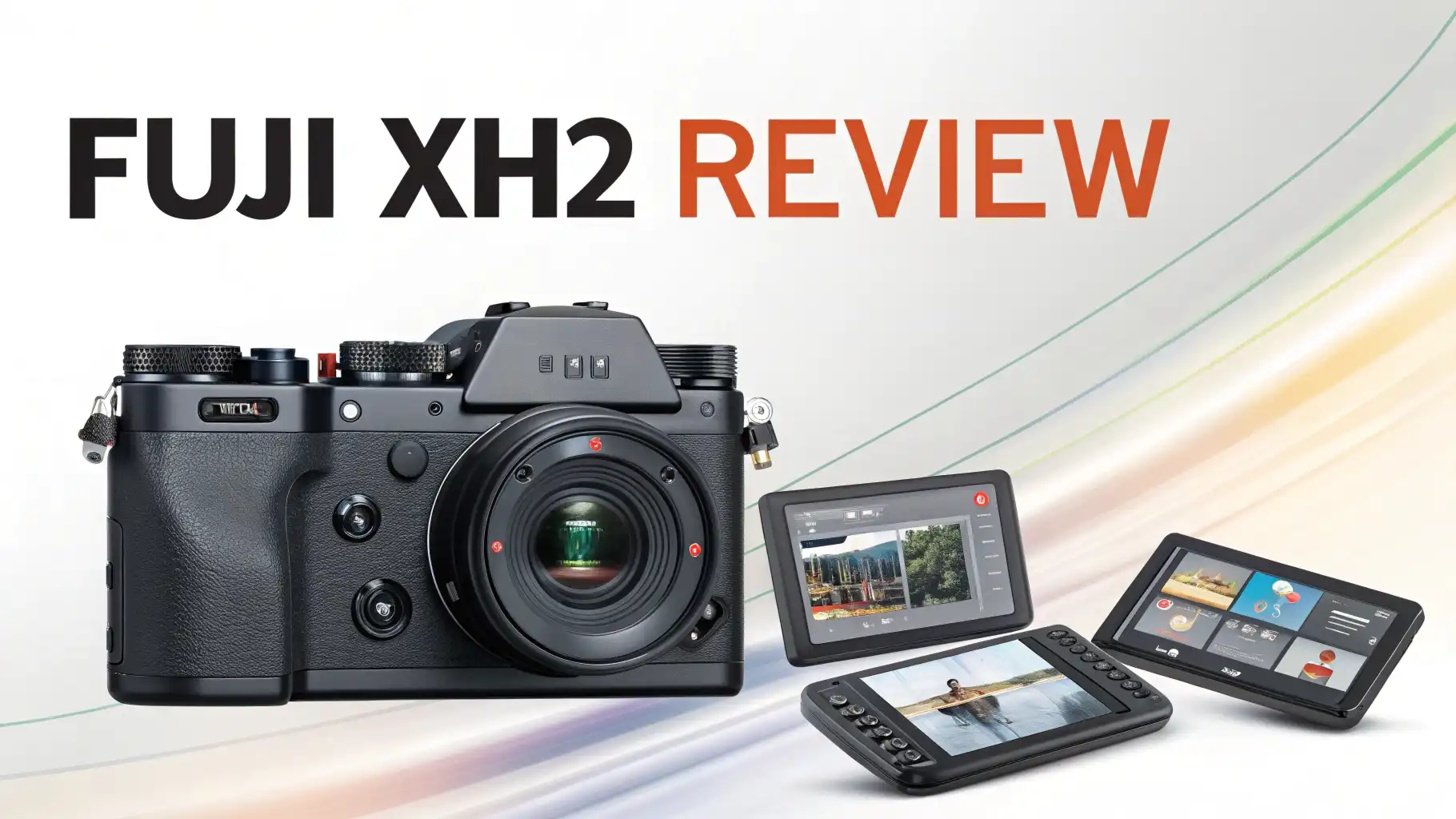
The Fujifilm X-H2 stands as a powerful testament to what APS-C cameras can achieve in the modern era.
This camera breaks the traditional boundaries between crop sensor and full-frame performance.
This review will walk you through every aspect of this remarkable camera. You will discover why so many professionals have made the switch to this system.
Key Takeaways
- Revolutionary 40.2MP X-Trans CMOS 5 HR sensor delivers exceptional detail and dynamic range that rivals many full-frame systems, making it perfect for landscape, portrait, and commercial photography work
- 8K/30p and 4K/60p video recording capabilities provide professional-grade video options with impressive oversampling, giving content creators cinema-quality footage in a compact body
- Pixel Shift Multi-Shot technology combines 20 images to create stunning 160-megapixel files for ultimate detail in controlled shooting environments
- Advanced autofocus system with subject detection AI accurately tracks faces, eyes, animals, birds, cars, motorcycles, bikes, airplanes, and trains across the frame
- Exceptional build quality with weather-sealing, dual card slots, high-resolution EVF, and professional ergonomics makes this camera ready for demanding field work
- Film simulations and color science provide Fujifilm’s signature look straight out of camera, reducing post-processing time significantly
Understanding the Fujifilm X-H2

- Live in detail with the world’s first 40-megapixel APS-C sensor X-H2 blends the compact and...
- X-H2 uses its native 8K video resolution to give filmmakers several ways of unlocking the...
The Fujifilm X-H2 represents a significant milestone for the X-series lineup. This camera arrived in late 2022 as the resolution-focused counterpart to the speed-oriented X-H2S. Fujifilm designed this camera for photographers and videographers who prioritize image quality above all else.
The 40.2-megapixel sensor inside this camera marks a major departure from previous X-series models. Most Fujifilm cameras used sensors in the 26-megapixel range. This new sensor provides substantially more resolution for cropping and large prints. You gain creative flexibility that previous generations could not match.
The X-Trans CMOS 5 HR sensor uses a unique color filter array. This design eliminates the need for an optical low-pass filter. The result is sharper images with better detail rendering. Fujifilm’s approach to sensor design continues to set them apart from competitors.
Sensor Performance and Image Quality
Image quality from the X-H2 exceeds expectations at every ISO level. The 40.2-megapixel files capture incredible detail in both shadows and highlights. Dynamic range performance matches or exceeds many full-frame competitors. You can pull details from darker areas without introducing excessive noise.
The X-Trans sensor technology produces images with minimal moiré and false color. This characteristic makes the camera excellent for architectural and fashion photography. The sensor’s phase-detection pixels cover nearly the entire frame. This coverage improves focus accuracy across different shooting scenarios.
High ISO performance remains impressive despite the higher pixel density. Images at ISO 3200 show excellent usability for most applications. ISO 6400 works well when you shoot RAW and apply moderate noise reduction. The camera’s base ISO of 125 provides maximum dynamic range for studio work.
Color reproduction stands out as one of Fujifilm’s strongest attributes. The X-H2 inherits the company’s decades of film simulation expertise. Straight-out-of-camera JPEGs often require minimal editing. This feature saves significant time in post-processing workflows.
Resolution Advantages for Professional Work
The 40-megapixel sensor opens new creative possibilities for professional photographers. Large prints maintain exceptional sharpness even at poster sizes. Commercial clients often demand high-resolution files for flexible layouts. This camera delivers the file sizes that agencies expect.
Cropping flexibility becomes a major advantage in fast-paced shooting situations. You can crop to 50% and still have a 20-megapixel image. This capability proves invaluable for wildlife and sports photography. Sometimes you cannot get physically closer to your subject.
The resolution benefit extends to product and studio photography as well. Fine details in textures and materials come through beautifully. Fashion photographers appreciate how fabric details and skin textures render. The extra resolution helps when retouching requires pixel-level precision.
Landscape photographers find the X-H2 particularly appealing. Scenes with intricate details benefit from the high pixel count. You can capture sweeping vistas while maintaining detail in distant elements. The combination of resolution and Fujifilm’s color science produces stunning results.
Top 3 Alternatives for Fujifilm X-H2

- 40.2 Megapixel X-Trans CMOS 5 HR BSI Imaging Sensor
- 15 Frames per second in Mechanical Shutter

- 26.0MP APS-C format Exmor R back-illuminated CMOS sensor
- BIONZ XR processing power for exceptional image quality

- High Image Quality: Canon EOS R7 4K digital camera features a 32.5-megapixel APS-C CMOS sensor...
- Advanced Autofocus: Dual Pixel CMOS AF technology with up to 651 AF zones; uses every pixel on...
Video Capabilities and 8K Recording
The X-H2 excels as a hybrid camera for serious videographers. The camera records 8K video at 30 frames per second. This resolution provides enormous flexibility for cropping and reframing in post-production. You can deliver 4K projects while maintaining the ability to punch in digitally.
The 4K video quality benefits from 6.2K oversampling. This process captures more information than needed and then downscales it. The result is exceptionally clean 4K footage with reduced noise. The detail level surpasses cameras that record 4K without oversampling.
Internal recording options include professional codecs like Apple ProRes. These formats provide higher quality than standard compression methods. Serious videographers appreciate the flexibility these codecs offer in color grading. You maintain more image information throughout the editing process.
The camera supports F-Log2 recording for maximum dynamic range in video. This logarithmic profile preserves detail in highlights and shadows. Colorists can push the footage further in post-production. The latitude matches what you expect from dedicated cinema cameras.
Autofocus System Performance
Fujifilm significantly improved autofocus performance with the X-H2. The system uses phase-detection pixels across almost the entire sensor. This coverage ensures consistent focus acquisition regardless of composition. The camera locks onto subjects quickly and tracks them reliably.
Subject detection AI recognizes multiple categories of subjects. The system identifies humans, animals, birds, vehicles, and more. Face and eye detection works exceptionally well for portrait photography. The camera maintains focus even when subjects move erratically.
Autofocus in video mode performs admirably for most situations. The system tracks subjects smoothly without excessive hunting. Native Fujifilm lenses work best with the autofocus system. Third-party lenses may show less consistent performance.
Some photographers note the autofocus does not quite match Sony or Canon in extreme situations. Fast-moving sports with unpredictable movement can challenge the system. For most photography and video work, the performance proves more than adequate.
Build Quality and Weather Sealing
The X-H2 features robust construction that inspires confidence in the field. The magnesium alloy body feels solid without being excessively heavy. The camera weighs approximately 660 grams without a lens. This weight balances well with most Fujifilm X-mount lenses.
Weather sealing protects against dust and moisture in challenging conditions. The camera features sealing at 94 different points throughout the body. You can shoot in light rain or dusty environments without worry. This protection proves essential for documentary and travel photography.
The grip design provides excellent ergonomics for extended shooting sessions. Larger hands find the grip comfortable and secure. The button layout follows professional camera conventions. Most controls fall naturally under your fingers without looking.
The camera includes dual card slots for backup recording or overflow capacity. Both slots accept UHS-II SD cards for fast write speeds. Professional photographers appreciate the redundancy this configuration provides. You reduce the risk of losing critical images.
Electronic Viewfinder and LCD Screen
The electronic viewfinder offers an impressive 5.76-million-dot resolution. This high pixel count provides a clear and detailed view of your scene. The 0.8x magnification gives a large, immersive viewing experience. You can accurately judge focus and composition through the viewfinder.
The viewfinder refresh rate reaches 120 frames per second. This high rate reduces lag and makes panning feel smooth. Eye-level composition becomes more comfortable during long shooting sessions. The viewfinder remains visible even in bright sunlight.
The rear LCD screen features a three-way tilting mechanism. This design allows positioning for high and low angles. The screen does not fully articulate like some competitor models. Portrait orientation vlogging requires an external monitor solution.
The screen’s touch functionality works well for menu navigation and focus point selection. You can tap to focus while composing through the viewfinder. The interface responds quickly to touch inputs. These features streamline your shooting workflow.
Battery Life and Power Management
The X-H2 uses the NP-W235 battery that provides decent power capacity. You can expect approximately 540 shots per charge using the viewfinder. This performance falls within the average range for mirrorless cameras. Video recording drains the battery more quickly than stills.
Many photographers carry multiple spare batteries for full-day shoots. The battery charges via USB-C when needed in the field. This charging option proves convenient when traveling. You can use portable power banks to extend shooting time.
The camera supports USB-C power delivery for continuous operation. This feature benefits studio photographers and videographers. You can run the camera indefinitely from AC power. The USB-C port also allows data transfer and remote shooting control.
Power management options let you customize battery usage. You can adjust screen brightness and auto-shutoff timing. These settings help maximize battery life in critical situations. Smart power management extends your shooting time significantly.
Film Simulations and Color Profiles
Fujifilm’s film simulation modes remain a major selling point for many photographers. The X-H2 includes 19 different film simulation options. These profiles replicate classic Fujifilm film stocks from decades past. Each simulation produces a distinct aesthetic character.
Velvia simulation creates vibrant and saturated colors perfect for landscapes. Provia delivers a more neutral and balanced color palette. Classic Chrome produces muted tones with slightly desaturated colors. These simulations reduce the need for extensive post-processing.
Many wedding and event photographers shoot JPEG with film simulations. The straight-out-of-camera results require minimal editing. This workflow saves hours of post-production time. Clients receive their images faster with consistent color rendering.
You can also shoot RAW files and apply film simulations later. This approach provides maximum flexibility in post-processing. The simulations work in both photo and video modes. Your footage can match your still photography aesthetic.
Lens Compatibility and System Support
The Fujifilm X-mount system offers an extensive lens selection. You can choose from over 40 native lenses ranging from ultra-wide to super-telephoto. The lens lineup includes many professional-grade options with weather sealing. Fujifilm continues to expand the system with new releases.
Third-party manufacturers support the X-mount as well. Sigma, Tamron, and Viltrox produce affordable alternatives. These lenses provide excellent value for budget-conscious photographers. Adapter options allow using vintage manual focus lenses.
The high-resolution sensor demands sharp lenses to maximize detail. Fujifilm’s premium lenses like the Red Badge series excel on the X-H2. These lenses resolve exceptional detail across the frame. Budget lenses may show limitations at higher magnifications.
Investing in quality glass makes sense with this camera body. The sensor can reveal lens shortcomings more easily than lower-resolution cameras. Choose lenses that match your image quality expectations.
Pixel Shift Multi-Shot Technology
The X-H2 introduces Pixel Shift Multi-Shot to the X-series lineup. This feature captures 20 separate images while shifting the sensor slightly. Software then combines these images into a 160-megapixel composite file. The resulting image shows extraordinary detail.
This technology works best with static subjects on a tripod. Landscape, product, and architectural photography benefit most. Any subject movement between exposures causes artifacts in the final image. The technique requires patience and careful setup.
The pixel shift files demand substantial computer processing power. The software takes several minutes to process each composite. You need adequate storage space for these massive files. The workflow suits commercial projects with specific resolution requirements.
Not every photographer needs this feature regularly. The capability exists when projects demand ultimate resolution. Museum reproduction and large-format printing justify the extra effort. This feature future-proofs your camera investment.
Connectivity and Workflow Integration
Modern cameras must integrate seamlessly with digital workflows. The X-H2 includes built-in WiFi and Bluetooth connectivity. You can transfer images wirelessly to mobile devices or computers. The Fujifilm Camera Remote app provides extensive camera control.
The app allows adjusting exposure settings and triggering the shutter remotely. You can review images on your phone or tablet screen. This capability proves useful for client reviews during shoots. Wireless tethering supports several professional workflows.
USB-C connectivity enables fast wired transfers when speed matters. The camera shows up as a webcam when connected to computers. This feature benefits content creators who stream or record video calls. The camera provides superior image quality compared to built-in webcams.
The X-H2 supports remote shooting via Fujifilm’s tethering software. Studio photographers can control the camera from their computer. Images appear on the large screen immediately after capture. This workflow streamlines client collaboration during sessions.
Low Light Performance
The X-H2 handles low light situations with impressive capability. The APS-C sensor performs well despite the high pixel count. Images at ISO 1600 show minimal noise in most situations. You can confidently shoot in dim indoor lighting.
ISO 3200 remains very usable for most applications. Wedding photographers regularly work at these sensitivity levels. The files respond well to moderate noise reduction in post-processing. Detail preservation remains good even in shadow areas.
Pushing to ISO 6400 introduces more visible noise but maintains acceptable quality. Documentary and photojournalism work often requires these higher ISOs. The camera delivers when ambient light becomes challenging. RAW files provide more flexibility than JPEGs at extreme ISOs.
The camera’s expandable ISO range reaches ISO 51,200 in emergency situations. Image quality degrades significantly at these extreme settings. Use them only when capturing the moment matters more than technical perfection.
Continuous Shooting Speed
The mechanical shutter reaches 15 frames per second with continuous autofocus. This speed handles most action photography situations adequately. Sports and wildlife photographers can capture decisive moments. The buffer depth allows extended bursts before slowing down.
Electronic shutter mode increases the speed to 20 frames per second. This mode eliminates shutter vibration and operates silently. Indoor sports and ceremonies benefit from quiet operation. Electronic shutter can introduce rolling shutter artifacts with fast movement.
The X-H2 prioritizes resolution over speed compared to the X-H2S sibling. The X-H2S reaches 40 fps but uses a lower resolution sensor. Choose the X-H2 when image quality matters more than burst rate. Your shooting style determines which camera fits better.
Buffer performance depends on your memory card speed. Fast UHS-II cards maintain shooting speed longer. The camera can capture over 100 RAW frames before slowing. This capacity exceeds what most situations require.
Value Proposition and Price Consideration
The X-H2 body retails for approximately $2,299 in most markets. This price positions it below many full-frame competitors. You get exceptional image quality without the full-frame price premium. The value proposition becomes particularly attractive when considering system costs.
Fujifilm X-mount lenses generally cost less than full-frame equivalents. You can build a complete professional system for reasonable investment. The smaller and lighter gear reduces fatigue during long shooting days. Travel becomes easier with a more compact system.
The camera competes directly with options like the Sony A7 IV and Canon EOS R6. Those full-frame cameras offer certain advantages in specific areas. The X-H2 counters with higher resolution and excellent overall performance. The choice depends on your specific priorities.
Some photographers question whether APS-C makes sense for professional work. The X-H2 demonstrates that sensor size alone does not determine quality. This camera produces results that satisfy demanding clients. Your creative vision matters more than sensor dimensions.
Who Should Buy the Fujifilm X-H2
Landscape photographers find tremendous value in the X-H2’s capabilities. The 40-megapixel sensor captures sweeping vistas with beautiful detail. The combination of resolution and portability suits outdoor photography perfectly. Weather sealing protects your investment in challenging conditions.
Portrait photographers appreciate the camera’s accurate skin tone reproduction. The film simulations provide beautiful results straight from the camera. High resolution allows substantial cropping for different compositions. Clients respond positively to Fujifilm’s signature color rendering.
Wedding and event photographers benefit from the hybrid capabilities. The camera excels at both stills and video work. You can cover entire events with a single camera body. The reliable autofocus tracks subjects during ceremonies and receptions.
Content creators need versatile tools for multiple platforms. The 8K video capability provides future-proof recording options. The camera handles YouTube, Instagram, and commercial projects equally well. Internal ProRes recording simplifies professional workflows.
Does the Fujifilm X-H2 Have Any Weaknesses?
The autofocus system occasionally struggles with erratic subject movement. Fast-paced sports with unpredictable action can challenge the system. Sony and Canon offer slightly more reliable tracking in extreme scenarios. Most photographers find the performance acceptable for their needs.
Battery life falls short of what some competitors deliver. You will need multiple spare batteries for full-day assignments. This requirement adds cost and weight to your kit. USB-C charging partially mitigates this limitation.
The LCD screen lacks full articulation for selfie-style recording. Content creators who shoot themselves face awkward composition angles. External monitors provide a solution but add complexity. Competitors offer more flexible screen designs.
The camera body lacks built-in image stabilization. You depend entirely on lens-based stabilization systems. Not all Fujifilm lenses include stabilization features. This omission affects video work more than still photography.
Frequently Asked Questions
Is the Fujifilm X-H2 worth buying in 2026?
Yes, the Fujifilm X-H2 remains an excellent choice in 2026. The camera delivers professional image quality that continues to compete with newer models. The 40-megapixel sensor produces files that meet current industry standards. Fujifilm regularly releases firmware updates that improve performance. The camera will serve you well for years to come.
How does the X-H2 compare to full-frame cameras?
The X-H2 produces image quality that rivals many full-frame cameras. The high-resolution APS-C sensor captures excellent detail and dynamic range. You sacrifice some shallow depth of field capability compared to full-frame. The camera excels in most practical shooting situations. Sensor size matters less than overall system design and lens quality.
Can the X-H2 shoot professional video?
Absolutely. The X-H2 provides professional-grade video features including 8K recording and internal ProRes codecs. The F-Log2 profile offers excellent dynamic range for color grading. Many professional videographers use this camera for commercial projects. The video quality exceeds what many clients require. You can confidently use it for paid video work.
What lenses work best with the X-H2?
The high-resolution sensor benefits most from Fujifilm’s premium lens lineup. The Red Badge series lenses deliver exceptional sharpness across the frame. The XF 16-55mm f/2.8 works well for general photography. The XF 50-140mm f/2.8 excels for portraits and events. Prime lenses like the XF 56mm f/1.2 produce beautiful results. Choose quality glass to maximize the sensor’s potential.
How long does the X-H2 battery last?
The NP-W235 battery provides approximately 540 shots per charge when using the viewfinder. Video recording reduces battery life significantly depending on settings. Most photographers carry at least two spare batteries for full-day work. USB-C charging allows topping up batteries between shooting sessions. Consider a vertical grip for extended battery capacity.
Does the X-H2 have good autofocus for sports?
The autofocus system handles most sports photography situations well. The subject detection AI tracks athletes and vehicles reliably. Very fast and unpredictable movement can occasionally challenge the system. The 15 fps burst rate captures decisive moments adequately. Professional sports photographers might prefer the X-H2S for faster action. The X-H2 works fine for amateur and semi-professional sports work.

Hi, I’m Sam! I’ve been passionate about technology for over a decade, fascinated by how innovative devices can transform our daily lives. As the founder of DeviceDiary.blog, I spend my days testing the latest gadgets, exploring AI innovations, and translating complex tech specs into practical insights.