Open ear earbuds have changed how people listen to music on the go. The Huawei FreeClip stands out as one of the most talked about pairs in this growing category. These tiny clip on buds look like jewelry, feel like nothing, and sound surprisingly full for their size.
In 2026, the FreeClip still holds strong against newer rivals. Many shoppers want a comfortable pair that does not block outside sound. Some need buds that stay put during a run. Others just hate the pressure of silicone tips inside their ears.
This review covers everything you need to know before buying. You will learn about sound, fit, battery, calls, app support, and value. By the end, you will know if the FreeClip is the right pick or if a newer model fits you better. Let us jump in.
In a Nutshell
- Featherlight comfort stands out as the biggest win. Each bud weighs only 5.6 grams and clips around the ear without any pressure on the canal.
- Sound quality is balanced with clear vocals and decent bass. The 10.8mm driver pushes more low end than most open ear buds in this size.
- Battery life hits 8 hours per bud and up to 36 hours with the case. That is plenty for long workdays or travel.
- IP54 water resistance keeps them safe during sweaty workouts and light rain. The case itself has no rating, so keep it dry.
- Bluetooth 5.3 with dual device support makes switching between a phone and laptop smooth. The AI Life app adds tuning options for Android and iOS.
- Price sits around $179 to $199 in 2026, which puts them below Bose but above budget rivals like Soundcore.
What Are the Huawei FreeClip Earbuds?
No products found.
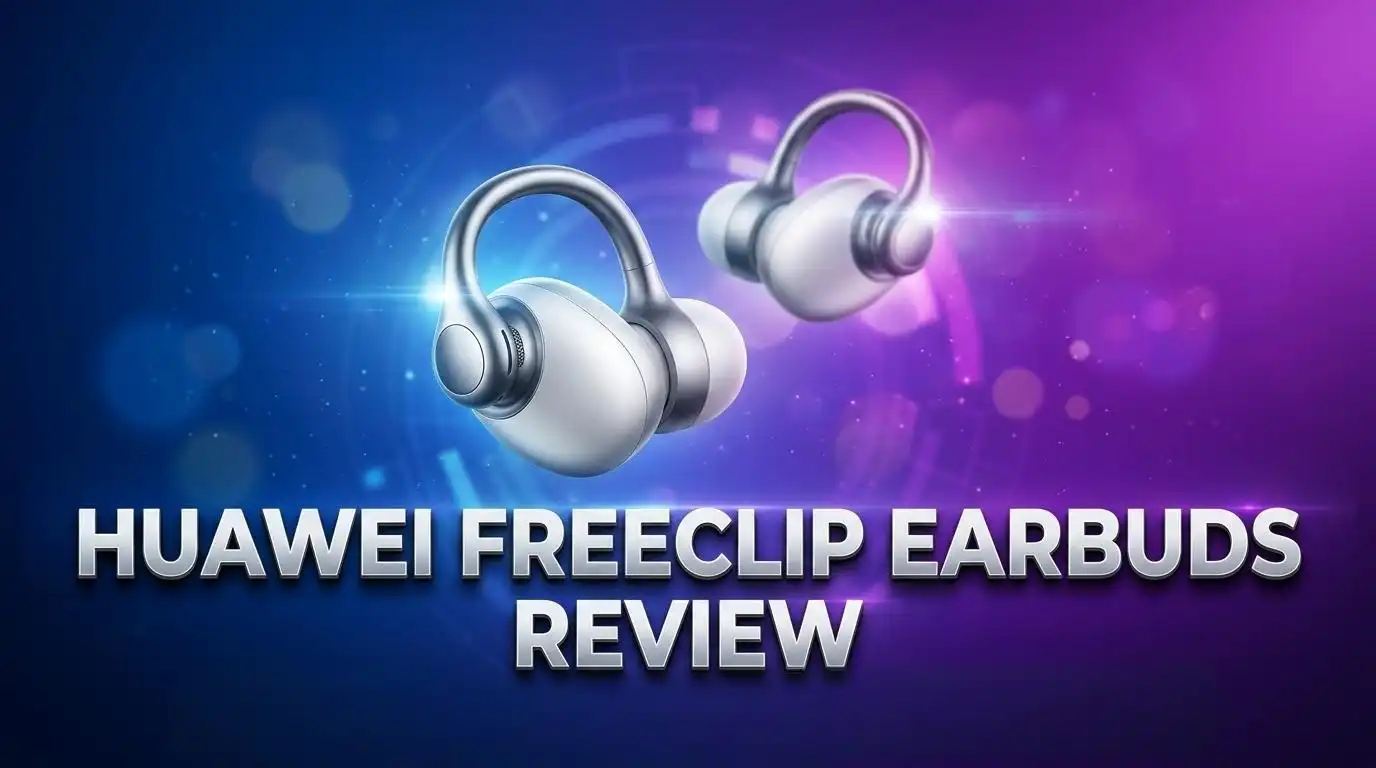
The Huawei FreeClip is the brand’s first true open ear clip on earbud. It launched in late 2023 and stayed popular through 2026. Huawei calls the design a C bridge because a small curved arm connects two beads that sit on each side of your ear lobe.
One bead holds the speaker and faces your ear canal. The other bead sits behind your ear and acts as a counterweight. This design keeps the buds steady without pushing anything inside your ear.
The look is bold and almost like jewelry. You can wear them in either ear because they auto detect left and right. That trick is rare and very handy when you grab a bud in a rush.
The FreeClip ships in black, purple, or white. The case is small, oval, and slips into a pocket with ease. Inside the box you get the buds, the case, a short USB C cable, and a quick start guide. Nothing fancy, but everything you need.
Design and Build Quality
The FreeClip wins big on design. Each bud weighs 5.6 grams, which is light enough to forget you are wearing them. The C bridge bends gently and adapts to most ear shapes. The finish feels premium with a smooth matte coating.
The shell is built from high strength nickel titanium alloy. This metal flexes without breaking and snaps back to shape. Huawei tested the bridge over 10,000 bends, so daily use will not weaken it.
The case looks like a polished pebble. It has a soft touch finish and a single LED on the front. A USB C port sits on the back, but there is no wireless charging. That is a small letdown at this price.
Build quality feels solid and well thought out. The hinge on the case is firm and the buds click into their magnets with a satisfying snap. After months of daily use, the finish holds up well. No scratches, no creaks, no loose parts.
Comfort and Fit
Comfort is where the FreeClip shines brightest. The clip design hooks around your lobe without any pressure. People who hate in ear tips will love this style. There is no suction, no itch, and no fatigue after hours of wear.
I wore them for eight straight hours while writing and editing. By the end I had to check my ears to confirm they were still there. That is how light they feel.
The fit suits most ear shapes, but very small or very large ears may need a moment to find the sweet spot. Once placed correctly, they stay put during walks, gym sessions, and even short jogs. Hard sprints might shake them loose, so they are not ideal for intense running.
Glasses wearers will be happy here. The buds do not press against arms or frames. You can also wear them with hats, helmets, and headbands without any clash. The auto left right detection means you never fumble for the correct side.
Sound Quality and Audio Performance
Open ear buds usually struggle with bass because air leaks out. The FreeClip fights this with a 10.8mm dynamic driver that punches above its size. Bass is present, mids are warm, and highs stay crisp without being sharp.
Vocals come through clean and forward, which makes podcasts and audiobooks a joy. Pop and acoustic tracks sound full. Bass heavy genres like hip hop and EDM lose some thump compared to in ear buds, but the energy is still there.
In quiet rooms the sound feels rich and detailed. On a busy street or in a loud cafe, you will lose some low end because outside noise mixes in. That is the nature of open ear audio and not a flaw of the FreeClip.
Huawei tunes the sound through the AI Life app. You can pick presets like bass boost, treble boost, or vocals. Custom EQ is also there for fine control. The default tuning suits most ears, but tweaking helps you match your favorite genre.
Battery Life and Charging
Battery life is one of the strongest features of the FreeClip. Each bud holds a 55 mAh cell that lasts up to 8 hours of music. The case adds three more full charges for a total of around 36 hours.
In real use I got close to 7 hours per charge at medium volume. That is enough for a full workday or a long flight. Calls drain the buds faster, so expect about 4 to 5 hours of nonstop talk time.
Charging is quick. A 10 minute top up gives you 3 hours of playback. A full charge from empty takes about 40 minutes for the buds and an hour for the case. There is no wireless charging, which is a miss at this price point.
The case shows battery level through one small LED. For exact numbers you need to open the AI Life app. Both Android and iOS users can check each bud and the case in seconds. The fast charge feature alone makes daily use stress free.
Top 3 Alternatives for Huawei FreeClip Earbuds
If the FreeClip is not the perfect fit for you, three other models stand out in 2026. Each one brings a different mix of price, sound, and features. Here are the best alternatives worth a look.

- OPEN YOUR EARS TO THE WORLD: Hear all of what’s around you while enjoying rich, private...
- BE IN THE MUSIC, ANYWHERE EVERYWHERE: With Bose Immersive Audio spatialized sound, these...

Last update on 2026-10-10 / Affiliate links / Images from Amazon Product Advertising API
The Bose Ultra Open Earbuds offer a similar clip design with premium tuning. They cost more, but the sound is richer and the immersive audio mode adds depth. Battery life is shorter at around 7.5 hours per charge.

- True-to-life audio, optimized for Dolby Atmos — Powered by Shokz SuperBoost, OpenFit Pro...
- Secure Fit, All-Day Comfort — Refined ergonomics help OpenFit Pro stay put through daily...
Last update on 2026-10-10 / Affiliate links / Images from Amazon Product Advertising API
The Shokz OpenFit Pro uses an ear hook instead of a clip. It stays more stable during runs and offers strong bass for an open ear bud. With Dolby Atmos support and up to 50 hours of total playtime, it is a top pick for active users.

- LDAC Rich Sound Audio: Experience unparalleled sound with a 16.2mm titanium-coated diaphragm...
- Marathon Playtime: Enjoy 14 hours of non-stop music on a single charge and an impressive...
Last update on 2026-10-10 / Affiliate links / Images from Amazon Product Advertising API
The Soundcore AeroFit Pro is the budget hero of the group. It packs LDAC support, big drivers, and 46 hours of battery in the case. The hook fit is secure and the price is much lower than Huawei or Bose options.
Call Quality and Microphone Performance
The FreeClip carries two microphones per bud with AI noise reduction. Voice calls come through clear in quiet rooms and stay usable on busy streets. Callers reported my voice sounded natural and full, not tinny.
In windy outdoor tests the mics struggled a bit. The wind noise filter helps but cannot block strong gusts. For most coffee shop or office calls the performance is more than good enough.
Video calls on Zoom, Teams, and Google Meet worked without delay. The bone conduction sensor picks up your voice and cuts background chatter. This trick helps a lot when traffic or chatter tries to drown you out.
The lack of an ear seal means you can hear yourself talk naturally. That stops the awkward shouting that some closed earbuds cause. Long calls feel less tiring because your own voice is not boxed in. For remote workers and students, call quality is one of the FreeClip’s quiet wins.
Connectivity and App Features
The FreeClip runs on Bluetooth 5.3 with support for SBC and AAC codecs. There is no LDAC or aptX, which is a small disappointment for audiophiles. For most users, the AAC stream sounds clean and stable.
Dual device connection is the highlight here. You can pair the buds with a phone and a laptop at the same time. Audio switches automatically when you take a call or play media on either device. The hand off is smooth and fast.
The AI Life app runs on Android and iOS. It lets you update firmware, change EQ, set gesture controls, and check battery levels. Setup takes less than a minute and the layout is clean.
Gesture controls use pinch and swipe motions on the back bead. A pinch plays or pauses, a double pinch skips a track, and a long pinch handles calls. The gestures feel natural after a day or two. Touch errors are rare because there is no flat surface to bump.
Water and Sweat Resistance
The FreeClip earns an IP54 rating. That means they shrug off dust, sweat, and light splashes. You can wear them in the rain or during a sweaty gym session without worry.
The rating does not cover full submersion. Do not wear them in the pool or shower. A quick wipe with a dry cloth after a workout keeps them in good shape for years.
The case has no IP rating, so keep it out of wet bags and damp pockets. If the case gets wet, dry it well before opening. Moisture inside can mess with the charging contacts.
For most active users, IP54 is plenty. Runners, cyclists, walkers, and gym goers can use them daily without fear. Just remember the buds are open, so heavy rain may interfere with sound clarity through water on the speaker grill. A simple shake clears that up fast.
Pros and Cons of Huawei FreeClip
Every pair of earbuds has trade offs. The FreeClip is no different. Here is a quick look at the strongest wins and the weak spots after long term use.
The pros start with comfort. These buds feel like nothing on your ears. Sound is balanced and clear, battery life is long, and the case fits any pocket. Dual device pairing works well and the design turns heads.
The cons include no wireless charging, no LDAC or aptX support, and a price that sits in premium territory. The case lacks a water resistance rating, and the buds can shake loose during hard runs. Bass lovers may miss the punch of sealed in ear buds.
For most users the good far outweighs the bad. The FreeClip is built for comfort, awareness, and all day wear. If those traits matter to you, the cons are easy to live with. If you want the deepest bass or the highest fidelity, look at sealed buds instead.
Who Should Buy the Huawei FreeClip?
The FreeClip suits a clear set of users. Office workers who take many calls will love the comfort and clear mics. Walkers and cyclists will appreciate hearing traffic and surroundings. Glasses wearers finally get earbuds that do not clash with their frames.
People who hate the plugged feeling of in ear tips will find these freeing. The open design means no pressure, no itch, and no ear fatigue. You can wear them from morning coffee to evening commute without a break.
Parents and caregivers also benefit. The open ear design lets you hear children, doorbells, and alerts while still enjoying music. Light sleepers can even wear them in bed without pain on the side of their head.
The FreeClip is not the best pick for hardcore runners or audiophiles. If you sprint, lift heavy, or chase top tier sound quality, look at sealed buds or ear hook designs. For everyone else, the FreeClip nails the daily use case.
Huawei FreeClip vs FreeClip 2: Quick Comparison
Huawei launched the FreeClip 2 in early 2026 as a refined sequel. Both models share the same clip on design and core idea. The differences are small but worth knowing before you spend.
The FreeClip 2 bumps water resistance to IP57, which covers brief water dips. Battery life grows to 38 hours total with the case. The driver is still 10.8mm but now uses a dual diaphragm for stronger bass.
Head motion controls are new on the FreeClip 2. You can nod to accept a call or shake your head to reject it. That feature feels gimmicky to some but handy when your hands are full.
The original FreeClip is now cheaper and often on sale. If you want the latest tech, the FreeClip 2 is the smart pick. If you want the best value, the original FreeClip still delivers nearly the same experience for less money. Both are solid choices in 2026.
Price and Value in 2026
The Huawei FreeClip launched at $199. In 2026, you can find it for $149 to $179 on most days. Sales drop it as low as $129 during major shopping events. That price sits below the Bose Ultra Open but above budget rivals.
For the comfort and design, the value is strong. You get premium materials, smart app support, and long battery life. The lack of wireless charging and high end codecs holds it back from a perfect score.
Compared to the Bose Ultra Open at around $299, the FreeClip saves you a lot without giving up much. Compared to the Soundcore AeroFit Pro at around $129, you pay more for nicer design and better app polish.
If you watch for deals, the FreeClip becomes a clear winner in the open ear space. At full price, it is still a fair buy for the comfort alone. Buyers who want the newest tech can grab the FreeClip 2 instead and pay a small premium.
Final Verdict: Is the Huawei FreeClip Worth It in 2026?
After months of testing, my answer is a confident yes. The Huawei FreeClip remains one of the most comfortable earbuds you can buy. The clip design is clever, the sound is balanced, and the battery lasts all day.
It is not perfect. The missing wireless charging and average codec support sting a little. The case has no water rating. Hard runners need a more secure fit. But these flaws are small next to the daily joy of wearing them.
For office workers, commuters, walkers, and anyone with sensitive ears, the FreeClip is a near perfect pick. The price has dropped enough in 2026 to make the value strong. You get jewelry like design, smart features, and a sound that surprises most listeners.
If you want comfort and awareness in one tiny package, buy the FreeClip with confidence. If you want the latest version, grab the FreeClip 2 instead. Either way, Huawei has set the bar high in the open ear category and it shows no sign of slowing down.
Frequently Asked Questions
Are the Huawei FreeClip earbuds good for running?
The FreeClip stays put during walks, gym sessions, and light jogs. For hard sprints or jumping workouts, they may shift on your ear. Runners who want zero movement should look at the Shokz OpenFit Pro with its hook design.
Do the Huawei FreeClip work with iPhone?
Yes, the FreeClip pairs with iPhone over Bluetooth 5.3. The AI Life app is also on the App Store, so you get EQ, gestures, and firmware updates. All core features work the same as on Android.
How long does the Huawei FreeClip battery last?
Each bud lasts up to 8 hours of music playback. The case adds about three more full charges for a total of 36 hours. A 10 minute quick charge gives you around 3 hours of extra playback time.
Can you hear surroundings with the Huawei FreeClip?
Yes, that is the point of open ear design. The buds do not block your ear canal, so you hear traffic, voices, and alerts clearly. This makes them safer for outdoor walks and friendlier for office use.
Is the Huawei FreeClip water resistant?
The earbuds carry an IP54 rating. That covers dust, sweat, and light rain. The case has no IP rating, so keep it dry. Do not wear the buds in the shower or pool.
Does the Huawei FreeClip support wireless charging?
No, the FreeClip case only charges over USB C. There is no wireless charging pad support. This is one of the few weak spots at the price point.
How does the Huawei FreeClip compare to Bose Ultra Open?
Both share a clip design and great comfort. The Bose has richer sound and immersive audio modes. The Huawei costs less, has longer battery life, and feels just as comfortable. Pick Bose for sound and Huawei for value.

Hi, I’m Sam! I’ve been passionate about technology for over a decade, fascinated by how innovative devices can transform our daily lives. As the founder of DeviceDiary.blog, I spend my days testing the latest gadgets, exploring AI innovations, and translating complex tech specs into practical insights.